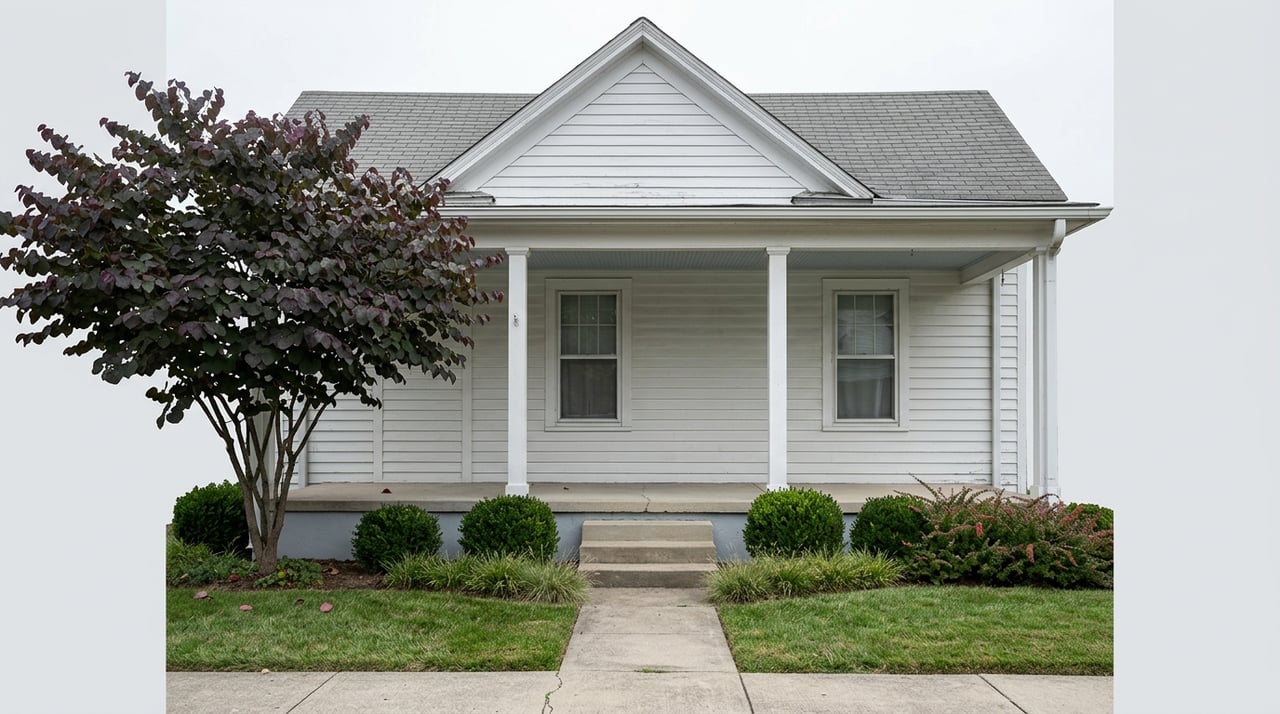
What Sandusky's New Short-Term Rental Rules Mean for Buyers Near the Water
August 13, 2026
August 13, 2026
"Short term rentals benefit those who already have money," Sandusky Commissioner Richard Koonce told his fellow commissioners during a December meeting on the city's transient rental moratorium. He was one of two commissioners who objected when the city let a temporary freeze on new rental applications lapse. Four months later, in April 2026, the city passed a permanent set of rules that made his side of the argument harder to ignore.
If you're shopping for a waterfront-adjacent property in Sandusky with an eye toward nightly rental income, the number that matters isn't the one on the listing sheet. It's whether the house you're buying actually carries a permit that survives the closing, and whether the city will ever let another house on that street get one.
Sandusky's transient rental code is specific on this point: a Transient Rental Permit is nontransferable, and a change in ownership requires the new owner to apply for their own permit before renting the dwelling short term again. The existing permit doesn't ride along with the deed. It expires with the sale, and every permit on the books expires again on December 31 regardless of when it was issued in the first place, according to the city's own code compliance page.
That single clause changes how you should read a listing that advertises trailing twelve months of Airbnb income. That income was earned under a permit that belongs to the seller, not the property. Whether you can replicate it depends on zoning, on inspection, and now, on a much narrower path to approval than existed even a year ago.
Sandusky caps citywide transient rental permits at 99, a limit confirmed by a GovTech case study describing how the city adopted automated monitoring software to enforce it. But a WKYC investigation published in February 2026 reported that roughly 180 short-term rentals were already operating within the city's designated overlay district alone, the zone that runs near Currant Street, Meigs Street, and Dutch Lane.
Those two numbers don't reconcile cleanly, and that's worth sitting with rather than smoothing over. It likely reflects a mix of legally non-conforming units grandfathered in before the ordinance existed, properties operating under older permit rules, and the gap between what a compliance database captures and what's actually listed on booking platforms. For a buyer, the takeaway isn't which number is right. It's that permit status is not something you can infer from a property's rental history or its location inside the overlay boundary. It has to be verified directly with the city's Division of Planning before you factor short-term income into your offer.
Before this year, a property outside the overlay that wanted transient rental eligibility could, in theory, pursue a rezoning. City Manager John Orzech explained to commissioners why that approach kept causing problems: broad zoning categories meant a change aimed at short-term rentals ended up touching a long list of unrelated uses. His comment, captured in the same WKYC report, was blunt: "The problem with the zoning change in neighborhoods is that if you change it, it's not just for transient rental. It has a whole list of things."
The Planning Commission's response, recommended on November 25, 2025, was to stop using rezoning for this purpose entirely. New transient rental overlay districts now have to originate from a formally adopted planning document, like a neighborhood plan, and individual parcels seeking eligibility outside an existing overlay have to go through the Board of Zoning Appeals as a use-variance case rather than a rezoning application, according to reporting on the commission's vote. Commissioners on the panel specifically worried that use variances could become a routine workaround if not handled carefully, and they cited the Cove District's 2018 expansion as an example of what piecemeal growth had already done to one neighborhood.
Charles Wenger, who lives in the Cove District, made that history concrete during public comment. He described watching houses on his own street get converted into short-term rentals advertising large sleeping capacities, and raised concerns about parking overflow and purchases by out-of-state investors. Lisa Mazuca, another resident who spoke at the hearing, put it more bluntly: "It's not just the housing stock, it's the people who live here." She pointed to a Firelands Forward study documenting the rise in vacation-rental use across Erie County.
The city commission finalized the new framework on April 13, 2026, passing Ordinance 26-061, which amended the accessory-use section of the zoning code, and Ordinance 26-062, which rewrote the transient rental property regulations themselves. You can read both on the city's ordinance archive. The net effect for anyone eyeing a non-overlay property as a future short-term rental: the path just got longer, more discretionary, and dependent on a public hearing process rather than an administrative form.
It helps to know what kind of street sits inside that boundary. On February 23, 2026, the city rezoned a parcel at 223-225 Meigs Street from two-family residential to Downtown Business, clearing the way for Bait House Brewery, a local microbrewery built on the site of a former bait and tackle shop that served Sandusky anglers for nearly seventy-five years. That rezoning happened on the same street named in the transient rental overlay.
That's not a coincidence so much as a pattern. The overlay district isn't a quiet residential subdivision that happens to allow nightly rentals. It's a corridor already absorbing commercial and hospitality uses, with the parking demand, foot traffic, and mixed-use character that comes with it. If you're comparing two houses at similar price points, one inside the overlay and one two blocks outside it, you're not just comparing income potential. You're comparing what kind of block you'd actually be living on or renting out.
Pull up Sandusky's housing numbers on three different sites right now and you'll get three different answers to the same question. Zillow's home value index put the typical Sandusky home at $126,953 as of June 2026, up 6.1 percent over the past year. A separate portal's July 2026 data put the median list price at $222,000, nearly double that figure. And a regional data aggregator's snapshot, pulled from May 2025 data, had put the median sale price at $175,000. That last number was already more than a year old by the time anyone reading this would see it.
None of these are wrong exactly. They're measuring different things: a value estimate across the entire housing stock, an asking price on active listings, and a closed sale figure from over a year ago. But none of them tell you anything about permit status, overlay eligibility, or whether the house you're looking at can legally do what a listing agent might imply it can do. The median is a starting point for a conversation, not a substitute for the zoning check.
For context on the demand side, AirDNA's market page, refreshed monthly and current through June 2026, shows Sandusky short-term rental revenue up 11.0 percent year over year with average daily rates climbing to $314 a night. Active listings, however, were down 3.7 percent over that same period. Demand is rising while the supply of legal, permitted units is shrinking. That's the scarcity the ordinance history explains.
If you're evaluating a Sandusky property with short-term rental potential, a few questions matter more than the asking price:
These aren't questions a median price answers. They're questions a property condition report and a phone call to the city can.
Ed Haynes has spent enough years walking through Northern Ohio properties with a contractor's eye to know that the number on a spec sheet rarely tells the whole story, whether it's a foundation crack or a zoning designation. If you're looking at a Sandusky property with rental income in mind and want a second set of eyes before you write an offer, Edward Haynes can help you separate what a listing promises from what the city will actually let you do with the house. Let's connect, get a free home valuation, and figure out what you're really buying.
Can I convert any house in Sandusky into a short-term rental? Only if it falls inside an approved Transient Rental Overlay District, sits in a zoning district that permits transient rentals outright or with a conditional use permit, or qualifies as a legally non-conforming use that predates the current ordinance. Outside those categories, you'd need to pursue a Board of Zoning Appeals use-variance case under the framework adopted in April 2026.
If I buy a house that's currently operating as a short-term rental, does the permit come with it? No. Sandusky's code specifically states that Transient Rental Permits are nontransferable, and a new owner must apply for their own permit before continuing to rent the dwelling short term.
Where exactly is the short-term rental overlay district? Reporting on the city's zoning debate places it near Currant Street, Meigs Street, and Dutch Lane, with additional eligibility in certain downtown business and commercial zoning districts. Exact parcel boundaries should be confirmed with the city's Division of Planning before you make an offer.
Explore Ed’s latest advice, local updates, and expert tips to make smart decisions when buying, selling, or investing in real estate.
Experience the difference of working with a trusted advisor who puts your goals first and delivers results.

EDWARD HAYNES
ADDRESS 237 W WASHINGTON ROW SANDUSKY OH 44870